
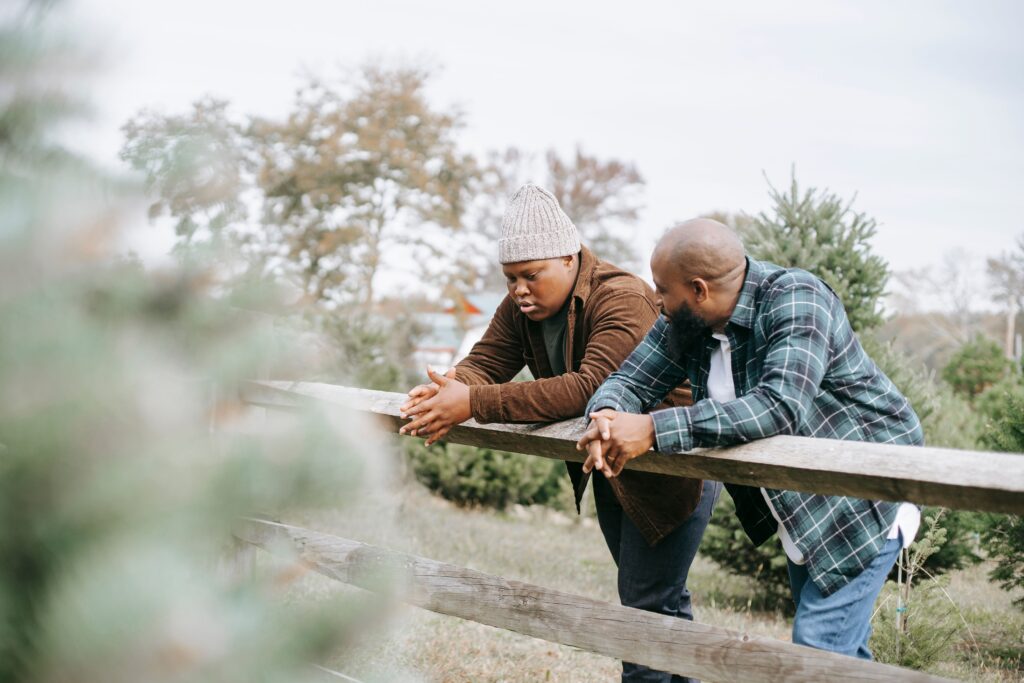
Many of us struggle to set boundaries, often putting others’ needs ahead of our own. Yet healthy boundaries are essential for emotional well-being, self-respect, and authentic relationships. They help us communicate our needs clearly while staying connected to others.
“Boundaries are the distance at which I can love you and me simultaneously.” – Brené Brown
Are you feeling angry, powerless, controlled by others or resentful? You probably need to set a boundary. If you find yourself having angry conversations with people in your head, you probably need to set a boundary. In this blog, we will explore why we need boundaries, how our self-worth influences our boundaries and how to use our boundaries to communicate who we are and how we deserve to be treated.
What Boundaries Really Mean
For many people, the word “boundaries” can feel confusing, even threatening. You might have been taught that setting limits is selfish, unkind, or even dangerous. But boundaries are not walls that shut people out. They are bridges, structures that allow you to connect with others in a way that is safe and respectful. A boundary says, “This is who I am, this is what I need, and this is how I can love you without losing myself.”
Boundaries are not punishment. They are protection. They protect your time, your energy, your body, and your emotional well-being.
Co-dependency and Boundary Erosion
One of the hallmarks of co-dependency is blurred boundaries. You might say yes when your whole body is screaming no, or put others’ needs above your own, every time. Perhaps you tolerate mistreatment because you fear being abandoned. Addiction, too, erodes boundaries. You might cross your own lines again and again, promising you won’t use, but using anyway, or sacrificing relationships, money, and health because the compulsion feels stronger than your values. Both struggles grow from the same soil, the belief that “I am not enough.”

The Beliefs Behind Weak Boundaries
Boundaries aren’t just about behaviour, they’re about belief. When you find it difficult to set limits, it often points back to old scripts such as “If I say no, I’ll be rejected,” “I’m responsible for everyone’s happiness,” and “Love will leave me if I stop giving.” As long as these beliefs run the show, boundaries will feel impossible. But when you begin to replace them with new beliefs, your boundaries naturally strengthen.
Beliefs That Strengthen Boundaries
Healthy boundaries grow from believing you are worthy. “I am worthy of respect”, “I do not have to sacrifice myself to keep love”, and “It’s okay if others are disappointed in me; my needs matter too.” Living from these beliefs doesn’t mean you become selfish. In fact, boundaries allow you to give more authentically. When your yes comes from a place of freedom instead of fear, it becomes a true gift. Boundaries keep relationships safe and love authentic.
When you show up as your true self, you give the other person the chance to choose if they want to be in a relationship with you. And if they do, then you know that they are choosing the real you, which means you are accepted and loved for who you are.
Being authentic means setting boundaries and speaking your truth without apology. That is sharing what you like and dislike, sharing an opinion that not everyone agrees with, or just being goofy when you feel like it. When you are authentic, people know that your “no” means “no” and your “yes” means “yes”. This gives them the freedom to do the same and the assurance that when you are together, you want to be there, which makes them feel safe.

Practical Tools for Setting Boundaries
Boundaries can feel overwhelming, but they can be built one step at a time. “Don’t do for others what they can do for themselves”, is often said in AA. Just as it is your job to take responsibility for your recovery, beliefs, thoughts, and actions, so is it the other person’s responsibility to do the same. Even if you disappoint someone, it is their responsibility to deal with their response to your boundary.
1. Start Small
Practice in low-stakes situations: declining a social invitation, asking for space, or requesting help with a task.
2. Use Simple Language
You don’t need long explanations. Have a few standard answers such as, no, I can’t do that right now, I need some time to think, or that doesn’t work for me. This buys you time to decide what you really want and need.
3. Expect Discomfort
The first time you set a boundary, guilt and fear will likely show up. That’s normal. Remember, discomfort is not danger. It’s just your nervous system adjusting to a new belief.
4. Celebrate Progress
Every boundary you set is a declaration of self-worth. Even the smallest one matters.
If you only take away one thing from this blog, it should be that you deserve to have a voice, your opinion counts, and you are allowed to protect it by setting boundaries. Boundaries empower us to ask for what we need.

Reflection Prompts
Take a few moments to write:
- What’s one area of your life where your boundaries feel weak or unclear?
- What belief makes it hard for you to set limits in that area?
- What new belief could you begin practising to support a healthier boundary?
- Write one boundary script you could try this week (e.g., “I’m not available tonight”).
Learning to set boundaries is an ongoing process that requires courage, practice, and self-compassion. Each boundary you set is a reminder that your needs, feelings, and voice matter. By protecting your well-being and living authentically, you create healthier relationships and a stronger sense of self-worth for yourself.